
Mongolia Study Abroad Market
In this Market Report on Mongolia we will cover socio-economics, educational and mobility trends. Mongolia is the 18th largest country in the world and has a population of over three million people. Mongolia is one of the fastest growing emerging economies, where the higher education sector is seen as a crucial means to help accelerate sustainable economic and social development.
Mongolian higher education has experienced a remarkable expansion since its transition from planned economy to open-market economy when Mongolia became a democratic country in 1990. Between 1991 and 2017, the number of higher education institutions(HEIs) grew from 14 to 113, and gross enrollment ratio in tertiary level grew from 14.0% to 69.0%.
Public expenditure on education is 18,3%. 10% is spent on higher education; mostly thru private expenditures through the payment of tuition fees, donations, and income generation (source: World Bank).Tuition fees are the largest source of financing for public higher education institutions, accounting for 70-85% of the total funds.
The student financial aid is provided from the semi governmental agency, the State Training Fund (STF). The financial aid provided from the STF includes tuition loans, grants, and scholar-ships. As of 2016, about 30% of students enrolled in higher education received some type of financial aid. All this and more in the Market Report on Mongolia.
Quick facts
Secondary education
Higher education
Upcoming Education Fairs in Mongolia
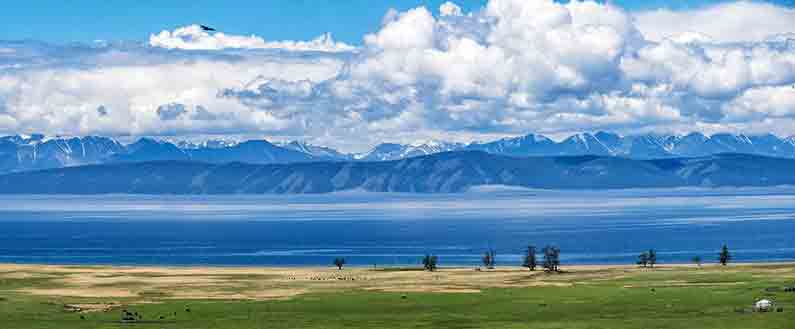
Mongolian Education System
Secondary education
Mongolia continues to adhere to the Soviet model of 10 years of school education of which 8 are compulsory, although this is being gradually extended in the direction of the European model. The first 4 years of lower secondary education are mandatory. The next 2 or 3 years of upper secondary education are optional. Students who do not attend a general school for 2 years may go on to vocational school instead, where they learn para-professional skills in for example primary school teaching or bookkeeping. (source: scholaro.com)
Higher Education
Admission to Higher Education is a 2 phased process. The first phase is “General Entrance Examination” (GEE). If a student successfully passes GEE, he or she can submit entrance application to any interested school. The second phase is School admission process after receiving application from students. GEE are tests based on Mongolian language, mathematics, social sciences (Knowledge about Society and Mongolian History), foreign language (English and Russian languages), chemistry, physics, biology and geography. The second phase is done based on school-specific criteria and takes into consideration the grades in complete secondary education, teachers’ evaluation, application essay, skills tests and interview. (source: Unesco)
Latest outbound mobility trends
The number of Mongolian students abroad today is much higher than is commonly reported. Certain destinations are reporting significant recent increases in Mongolian student numbers, suggesting a higher outbound total than what has been reported by sources such as UNESCO.
China, Japan, and Russia have set their sights on developing Mongolian talent for their companies and economies .
Mongolia is the #3 sender for South Korea. China is providing scholarships to more than 2,500 Mongolian students.
Russia has also been increasing the number of scholarships provided to Mongolian students; Eurasianet, an independent news organization covering the South Caucasus and Central Asian region, claims that “at any given moment, there are 2,000 Mongolians studying in universities across Russia, for free.”
Australia enrolls another 3,500 or so, the majority of whom are currently in ELT studies (ELICOS), but this represents an increase of 189% since 2015, when the number was just 1,230. Japan hosted a similar number in 2018 – 3,125 – a 24% increase over 2017 when there were 2,517 Mongolian students in Japanese universities. (source: ICEF monitor)
Latest Mongolian Higher Education study abroad stats
According to the UNESCO Institute for Statistics, a total of 14,731 Mongolian students are studying abroad. The most popular study destinations are:
IB schools in Mongolia
- International School of Ulaanbaatar – Ulaanbaatar – https://isumongolia.edu.mn/#welcome-to-isu
- Ulaanbaatar Elite International School – Ulaanbaatar – https://elite.edu.mn/
- American School of Ulaanbaatar – Ulaanbaatar – https://asu.edu.mn/
- English School of Mongolia – Ulaanbaatar – https://esm.edu.mn/
- French International School of Ulaanbaatar – Ulaanbaatar – https://www.facebook.com/EcoleFrancaiseMongolie/