
The Bulgarian Study Abroad Market
Bulgaria is one of Europe’s most internationally mobile student markets. Outbound mobility has increased steadily over the past decade, rising from 8% in 2013 to 10.8% in 2021 (UNESCO). By 2025, more than 25,000 Bulgarian students are enrolled abroad at bachelor’s, master’s, and doctoral levels. Bulgarian students predominantly choose EU destinations, attracted by free or low-cost tuition, mutual recognition of qualifications, and post-study work opportunities. Germany and the UK remain important destinations, alongside growing interest in Western Europe, particularly the Netherlands, Belgium, Italy, and Ireland. Popular fields include business and economics, law, psychology, architecture and design, and computer science, supported by Bulgaria’s strong tradition in mathematics and STEM education.
Despite gradual increases in funding, Bulgaria’s domestic education system continues to face structural challenges that push students abroad. Public expenditure on education remains among the lowest in the EU, and infrastructure gaps persist, particularly outside major urban centers. Limited access to modern facilities, laboratories, and research environments reinforces perceptions of constrained domestic opportunities. By 2025, Bulgarian students are increasingly focused on English-taught programs, employability, internships, and post-study work pathways, while remaining highly cost-sensitive. These factors ensure that Bulgaria will remain a high-mobility, high-potential recruitment market for international institutions in the years ahead.
Quick facts
Secondary education
Higher education
Upcoming Education Fairs in Bulgaria
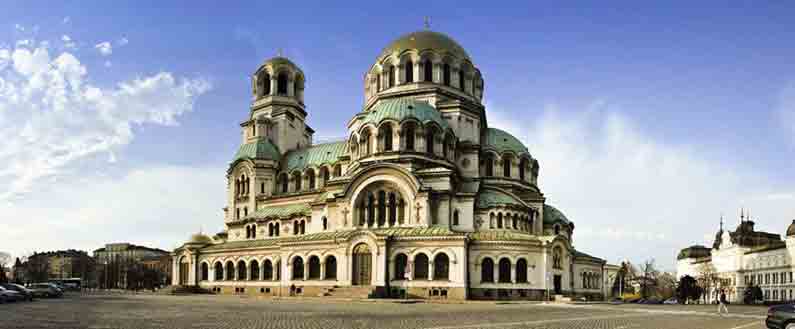

Bulgarian Education System
Education in Bulgaria is mainly regulated by the state through the Ministry of Education and Science. School education is compulsory for children from seven to sixteen years of age.
The Bulgarian educational system falls within the continental European tradition.
Secondary education
In Bulgaria, secondary education comprises 12 grades, organized in two major levels: basic and secondary. Basic education (grades first through eighth) is subdivided into two sub-levels: elementary (grades first through fourth) and presecondary (grades fifth through eighth).
Secondary education normally encompasses grades eighth through twelfth, but can start earlier depending on the type of school. There are two major kinds of secondary schools: secondary comprehensive, usually called gymnasia (high school) and secondary vocational, most often referred to as tehnikum (vocational school.)
Special schools at all educational levels accommodate students with impaired health. Private schools constitute a new element in the structure of the education system. (Source: stateuniversity.com)
Admission to Higher Education in Bulgaria
The requirements for enrollment in higher education depends on the type of institution. They include: written competitive exams (one or more), tests (varying in volume and structure in the different higher schools), and a diploma of completed secondary education.
The autonomy of higher education institutions allows them to define for themselves the requirements for enrollment every year. This enables them to organize admission in some specialties only on the basis of a diploma (a Diploma of secondary education) or by combining enrollment by diploma with a test or with exams.
Higher Education system
Higher education is provided exclusively by colleges and universities. In accordance with the Higher Education Act, they are all self-governing and autonomous institutions.
Types of Higher Education Institutions in Bulgaria
Higher education is provided by: universities, specialized higher schools and self-contained colleges.
Universities: provide scientific education in a wide range of subjects within at least three of the four major branches of science – humanities, natural sciences, social sciences and technical sciences. They offer bachelor’s, master’s and doctor’s degrees.
A specialized higher school conducts scientific research and offers courses of training in one of the major areas of science, arts, physical culture, and military science. These higher schools also offer (university) master and PhD programs.
A self-contained college provides training on polytechnic level. It awards professional bachelor degrees.
A college may be established within the structure of a university or of a specialized higher school accredited for the professional areas or majors of regulated professional education. A college awards professional bachelor qualifications.
Training in doctoral programs is performed in Research Organizations such as Bulgarian Academy of Science, Agricultural Academy, etc.
(Source: ec.europe.eu)
The following qualifications are delivered by higher education institutions in Bulgaria:
- Bachelor: the duration of study is three to four years depending on the type of bachelor program. There is a distinction between the bachelor degrees from universities and polytechnics.
– Colleges (Polytechnics): 3 years, 180 ECTS
– Universities: 4 years, 240 ECTS - Master: the duration of study is one or two years; 60 or 120 ECTS.
– 1 year (60ECTS) for students with a BA or BSC degree
– 2 years (120 ECTS) for students with a Professional Bachelor degree - Doctor of Philosophy, PhD: the duration of study is 3 – 4 years.
Latest Bulgarian Higher Education study abroad stats
At this point a total number of 25,185 Bulgarian students are studying abroad, for or as part of a degree in higher education. (Source: Unesco). These are the most popular study abroad destinations:
IB schools in Bulgaria
- Meridian 22 High School – Sofia – https://highschool.meridian22-edu.com/en
- Anglo American School – Sofia – https://www.aas-sofia.org/
- Zlatarski International School – Sofia – https://zlatarskischool.org/
- American English Academy – Sofia – https://aeasofia.com/
- British School – Sofia – https://www.bssofia.bg/
- American College – Sofia – https://www.acs.bg/
- St. George International School – Sofia – https://stgeorgeschool.bg/